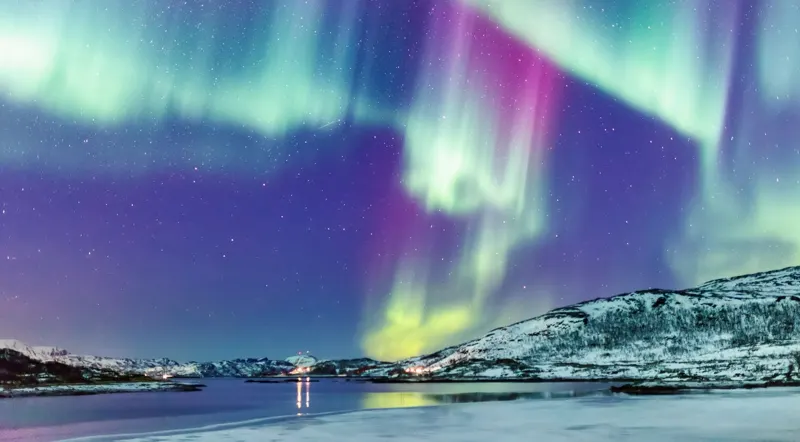
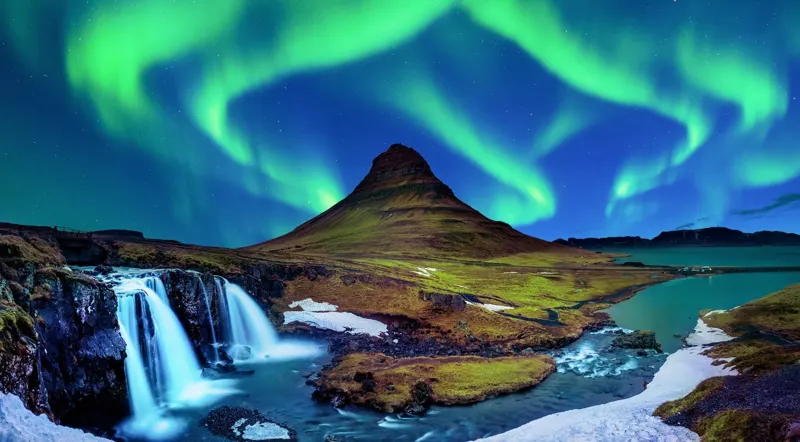
If your dates are already booked, use the month selector to plan around them. January offers long nights with little daylight; March allows more daytime sightseeing alongside dark evenings; June suits an indoor aurora exhibition during the bright summer period.
Dates & booking
Check This Experience’s Dates
Best for keeping the evening simple and the budget focused on transport and guiding. Select your date and party size to see the current price and available options.
Affiliate booking: we may earn a commission at no extra cost to you.
Listing details checked 2026-10-24. Open the calendar for date-specific prices; no live price is quoted on this guide.
Outdoor Northern Lights tours generally run from September to April, with some operators also advertising August departures. For a trip that combines daytime sightseeing with an aurora outing, consider September, October or March. December and January give you longer nights, but less daylight for the rest of your itinerary; no month guarantees clearer skies or a display.
Within the viewing season, book your first attempt early in your stay so another evening remains available if the operator cancels or you qualify for a retry. Choose the departure offered for your date, then check the cloud forecast and the provider’s message before leaving. If your dates fall in the bright summer period, choose the indoor Aurora Reykjavík exhibition for an aurora-themed visit instead of planning around an outdoor sighting.
Separate the season from the evening
The calendar tells you whether there is a practical window of darkness. The forecast helps you decide what the sky may be like during that window. Neither answers the whole question on its own. A winter date can be cloudy; an evening with gaps in the clouds can still have little visible activity.
Consider it for a mixed sightseeing and aurora trip
April
Nights shorten through the month
Verify the exact date, darkness and departure season
May
Bright-night period
Do not build the trip around outdoor aurora viewing
June
Bright summer nights
Choose an indoor aurora experience
July
Bright summer nights
Treat the museum as the relevant aurora option
August
Darkness returns toward the seasonal boundary
Verify late-month departures; do not generalise across August
September
Main season begins
Balance evening hunting with daytime travel
October
Nights lengthen noticeably
Keep the evening flexible around the forecast
November
Long-night winter planning
Allow for late returns and outdoor waiting
December
Long nights and little daytime light
Prioritise a manageable daily schedule
There is no evidenced quietest month or cheapest month in our product checks. Compare your actual date and party size instead of assuming a seasonal discount. The best weather for the outing is suitable local conditions on the day; monthly averages cannot confirm that a departure will run.
Check your month
Choose a month for seasonal planning advice, or use the month-by-month table above. This is not a live forecast or an availability check.
Check whether your chosen product offers a departure for the date. A calendar entry is a booking option, not proof that conditions will be suitable.
Use the official forecast’s Reykjavík darkness times and move its cloud map to the actual evening.
Read the provider’s go-or-cancel message before travelling to pickup.
Keep another evening available if your itinerary allows, and verify how the retry policy works.
Choose a format you can enjoy in that season
A bus gives you seated transport between outdoor stops. The yacht has indoor space, but watching from its decks still means exposure to wind and cold. Neither format makes the sky independent of the weather. If standing outdoors late at night does not suit your party, the museum is a different experience that can fit during the day.
There is no universal best departure hour that can be promised to every visitor. Use the operator’s date-specific timetable and allow for check-in or pickup before the advertised outing. Read the forecast guide for interpreting the map without confusing the activity score with a sighting guarantee.
Our sources and limitations
This guide combines Visit Iceland’s broad viewing season, the Icelandic Meteorological Office’s visibility guidance and the checked tour descriptions. It is not a forecast for your stay. We do not have comparable monthly sighting rates, and cannot tell you which month will deliver a display. The autumn and March suggestions reflect daylight preferences for a wider trip.